Tip of the Day: The YALSA Symposium is three months away! Who's going (besides me)?
I am rewriting the MG novel that got me my first agent in 2008. Two slightly different versions of that novel were subbed to -- and rejected by -- about eight editors over the course of 2008-2009.
This year I went back to that novel. I love that novel (unlike some drawer novels that I have no interest in working on again). I've been rewriting and revising it like crazy, with good feedback from my CPs, and think it is so much tighter and developed and the characters stand on their own.
The main plotline of the novel is the same, as is the setting, but the execution is just so much more on point because I am a much better writer now than I was in '08.
BUT, it is too late for an agent to look at that novel? Has the ship sailed? I know editors move around a lot from house to house, and some who read it are no longer at the same houses or even still in the pub business.
If this novel were polished and ready to go out four years after its first attempt, what do you suggest I do with it if I am unagented?
Deena, Miss Subbing for Pubbing

Showing posts with label Revising/Editing. Show all posts
Showing posts with label Revising/Editing. Show all posts
Wednesday, August 1, 2012

Wednesday, February 1, 2012
Been There, Read That (or Tired and True Tropes)
Tip of the Day, Librarian Edition: February is Love Your Library Month! Ask your local librarians what you can do for them!
All of us writers trying to sell books know that it is a tough, competitive market for YA. What can we do to stand out in the slush piles? One idea I plan to implement is to work harder on coming up with unique angles to introduce characters and plot points. No more taking the easy, tried and true way!
Based on the over 100 YA novels I read in the past year, scenarios I will be avoiding are:
--a new boy at school who immediately connects with the MC and is a huge part of her destiny, paranormal or realistic. (New setting besides the school intro, please.)
--the MC starts at a new school and immediately connects with a guy there who is a huge part of her destiny, paranormal or realistc. (Twilight.)
--the MC has a dead brother/sister/boyfriend/girlfriend and connects with the deceased's living brother/sister/boyfriend/girlfriend in order to heal from the loss. (This has been done beautifully in the recent past, and I'm ready for another fresh way for the MC to heal.)
--strictly defined cliques, including the obviously popular/beautiful girls who are cruel to the MC. (If I never see this again, I will be all too grateful. Why can't the ugly girls be the cruel ones?)
In a first draft, these elements are fine. But as you revise, brainstorm new ways of showing the relationships between characters. Dig deeper. Writing is hard anyway, so work a little harder and make it all worth it.
Deena, Miss Subbing for Pubbing
Tuesday, January 31, 2012
Enough is enough...
Tip of the Day: I started doing something I swore I'd never in my life resort to...keeping a food journal. But I have to admit its sort of easy with this app. All I have to do is search for foods and click to add to my journal. With all the hard work technically done for me, it's been enlightening and kind of fun. So for a few short weeks (or i.e. until the fun runs out), I'm going to give "MyFitnessPal" a try.
Every writer knows that revision is a necessity.
But just as important is stopping.
Because if we don't stop revising at some point then there would be no great books on the shelves or books for us to cuddle up with and read by awesome looking fireplaces like these.
However, determining when to stop revising always seems to be the tricky part.
Sure you want to stop after:
- Changing everything you get comments on that resonate with you.
- Reading your work multiple times. Preferably out loud. And correcting anything that doesn't sound right.
- And then after completing a final round of edits, even after what you thought was your last round.
But how do you know you're done?
I think the best indicator is your gut. If something deep down is telling you that one aspect still isn't "quite" right, then you need another edit.
If that feeling goes away. Or you feel that there is no possible way you could make something better then you are ready to stop revising (at least temporarily until you get more comments :)) Because if all you are doing is changing things instead of improving, then chances are "enough" might very well be "enough."

Image from: http://cheezburger.com/View/3010085120
--Emily, Miss Querylicious
Tuesday, January 24, 2012
5 Tricks to a Revising Mood
Tip of the Day: need a good stress relief? Check out some of these aromatherapy products. Cheap and effective!
If you are like me, then you have to be in a "certain" mood to revise. At least revise well. This magical mood makes everything flow better. It not only sparks ideas of paragraphs to move around, but the right words also start coming to you quicker than a Real Housewife can cause drama.
But knowing how to get in that magical mood can be a bit more challenging. Here are my Five Tricks to try when wanting to get in the revising mood.
1.) Get active: a good workout of the whole body definitely encourages the brain to get active as well.
2.) Get calm: my personal choice I mentioned last week: a nice long bath. It not only helps me think, but it calms my mind which makes my revising more productive.
3.) Get sweets. Enough said!
4.) Get focused: one of the best ways I've found to get in a revising mood is to not finish everything in the last revision session. That may seem counter productive, and unfortunately sometimes it is. But usually if I have an idea of what I'm working on when I sit down and have a game plan of how to attack it, things will go much easier. The harder part is knowing just how little you can leave undone that will motivate you to get back to your project later. For me, that's usually only one or two paragraphs of text that needs revised. Once I start that the next time around, I'm in the mood already and its easier to tackle the next forty pages of revisions.
5.) Get your booty in the chair. That's really all you need. Once you've done all the others the last trick is that you have to make time for revising. This is sometimes very hard. Especially when a marathon of the Real Housewives of Orange County is on. But resisting the urge and getting your butt in the chair is half the battle.
(Now if only I could find a booty chair like these, I'm sure I'd be in a revising mood all the time. Because who wouldn't be motivated to sit in one of these all the time? :) )
--Emily, Miss Querylicious
If you are like me, then you have to be in a "certain" mood to revise. At least revise well. This magical mood makes everything flow better. It not only sparks ideas of paragraphs to move around, but the right words also start coming to you quicker than a Real Housewife can cause drama.
But knowing how to get in that magical mood can be a bit more challenging. Here are my Five Tricks to try when wanting to get in the revising mood.
1.) Get active: a good workout of the whole body definitely encourages the brain to get active as well.
2.) Get calm: my personal choice I mentioned last week: a nice long bath. It not only helps me think, but it calms my mind which makes my revising more productive.
3.) Get sweets. Enough said!
4.) Get focused: one of the best ways I've found to get in a revising mood is to not finish everything in the last revision session. That may seem counter productive, and unfortunately sometimes it is. But usually if I have an idea of what I'm working on when I sit down and have a game plan of how to attack it, things will go much easier. The harder part is knowing just how little you can leave undone that will motivate you to get back to your project later. For me, that's usually only one or two paragraphs of text that needs revised. Once I start that the next time around, I'm in the mood already and its easier to tackle the next forty pages of revisions.
5.) Get your booty in the chair. That's really all you need. Once you've done all the others the
 last trick is that you have to make time for revising. This is sometimes very hard. Especially when a marathon of the Real Housewives of Orange County is on. But resisting the urge and getting your butt in the chair is half the battle.
(Now if only I could find a booty chair like these, I'm sure I'd be in a revising mood all the time. Because who wouldn't be motivated to sit in one of these all the time? :) )
--Emily, Miss Querylicious
Tuesday, January 17, 2012
The many joys of revising
Tip of the Day: want an interesting quick read? Check out this list of things from a 1911 The Ladies’ Home Journal on what they think life would be like in 100 years.
Revising is never fun, and it seems to be an ongoing learning pr ocess on discovering the best way for me to revise a current work-in-progress.
Currently, I'm working on revising based on feedback on the book, so I’m going about stuff a bit differently.
Here's what I've done:
Any tricks on revision you’d like to share?
Do you think you revise different for every book? Or is that just me?
Happy Editing everyone.
Emily, Miss Revise-a-maniac

Revising is never fun, and it seems to be an ongoing learning pr
 ocess on discovering the best way for me to revise a current work-in-progress.
Currently, I'm working on revising based on feedback on the book, so I’m going about stuff a bit differently.
Here's what I've done:
- Printed out the feedback and made a bulleted list of the main items that need work to keep by me as I read through the book.
- Read through a printed-out version of the manuscript and made notes throughout. I rarely print out my manuscripts, but I wanted to be able to quickly go back and forth between chapters to make notes on things once an idea came to me. To make this even easier I printed out two pages per sheet and single spaced. Not only did it save paper and the small text made me read more carefully, but it made it super easy to find chapters I wanted to mark-up after the fact.
- Kept a notebook beside me as a read through the manuscript to jot down larger items that I came up with to change. Some people use post it notes, but considering my desk at work is cluttered with about 20 post it notes at a time, I was trying to organize that clutter into one paper list to make it easier on me.
- Then I’ve just been going through page-by-page to make edits and change things that need work.
- As I'm editing on the page, I keep open multiple versions of the manuscript, so it's easier for me to move things around. I recently purchased a new computer and got two monitors with it that makes this super easy!
Any tricks on revision you’d like to share?
Do you think you revise different for every book? Or is that just me?
Happy Editing everyone.
Emily, Miss Revise-a-maniac
Wednesday, May 25, 2011
Emotional Truth (or Can You Handle the Truth?)
Tip of the Day: Take advantage of Wegmans $6 meals when you can.
Last week I talked about the Rochester Teen Book Fest and said I'd discuss my take aways from the event as a writer.

The overarching theme from the presenters I saw was to write to your emotions. Torrey Maldonado really brought this home with his invigorating speech. To all those sixth graders who have him for a teacher: you are so lucky!

Shari Maurer and Selene Castrovilla, who I spent most of my day with, kept reminding me and their audience to write "the emotional truth." If the story calls to be written in a certain way, write it. The plot of the novel doesn't need to mimic a real life experience the writer has had, but the EMOTIONS evoked from the manuscript should reflect a real emotion that has been experienced.

Some books are hard to write, but hard books need to be written. They will touch at least one reader. And that reader is important. That reader is who you are writing for. Selene's second book deals with cancer, and she had teens from the cancer center at one of her talks. Shari's book deals with heart transplants, and she had a 16-year-old who'd had 2 heart transplants at her talk. It gave me chills to hear these teens tell the authors what their books meant to them; that it made them realize they weren't alone. Chills.

TBF was not the first time I'd heard the expression about writing the emotional truth BUT it was the first time it really hit me about what that meant. In 2010 I rewrote the first novel I'd ever written and heavily revised my YA that is currently on sub. Both of those books were important for me to write because of the significant parts that pieces of them have played in my life. Not exact replicas of the situations or plots -- I made sure to NOT regurgitate my life in a novel -- but I realized in revising both works that in trying to avoid writing memoirs, I had skimmed over the emotional truths! Watered them down!
It took me a long time to figure out what emotion I intended to write, and that I needed to get there in whatever way felt natural, not by forcing the books to go in different directions to avoid autobiographical elements. And not by adding in autobiographical elements either.
Thank you, TBF authors, for giving me this reminder. I plan to use it in every writing session from now on.
*Another gem completely unrelated? When I asked Selene and Shari if they thought contemp realistic fiction like theirs would have a resurgence of popularity, they said they believe books like theirs will always have readers and followers -- it's just that the paranormal/sci-fi/fantasy readers are a lot more demonstrative (as was evidenced by manga author/illustrator Svetlana Chmakova's fans in their costumes at the Fest).
I think she's totally right. Trends will be trends, but those books that offer fun costumes and creatures will always have another avenue of marketing and drawing attention to the work.
Thoughts on any/all of this?
Deena, Miss Subbing for Pubbing
Last week I talked about the Rochester Teen Book Fest and said I'd discuss my take aways from the event as a writer.

The overarching theme from the presenters I saw was to write to your emotions. Torrey Maldonado really brought this home with his invigorating speech. To all those sixth graders who have him for a teacher: you are so lucky!

Shari Maurer and Selene Castrovilla, who I spent most of my day with, kept reminding me and their audience to write "the emotional truth." If the story calls to be written in a certain way, write it. The plot of the novel doesn't need to mimic a real life experience the writer has had, but the EMOTIONS evoked from the manuscript should reflect a real emotion that has been experienced.
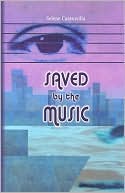
Some books are hard to write, but hard books need to be written. They will touch at least one reader. And that reader is important. That reader is who you are writing for. Selene's second book deals with cancer, and she had teens from the cancer center at one of her talks. Shari's book deals with heart transplants, and she had a 16-year-old who'd had 2 heart transplants at her talk. It gave me chills to hear these teens tell the authors what their books meant to them; that it made them realize they weren't alone. Chills.

TBF was not the first time I'd heard the expression about writing the emotional truth BUT it was the first time it really hit me about what that meant. In 2010 I rewrote the first novel I'd ever written and heavily revised my YA that is currently on sub. Both of those books were important for me to write because of the significant parts that pieces of them have played in my life. Not exact replicas of the situations or plots -- I made sure to NOT regurgitate my life in a novel -- but I realized in revising both works that in trying to avoid writing memoirs, I had skimmed over the emotional truths! Watered them down!
It took me a long time to figure out what emotion I intended to write, and that I needed to get there in whatever way felt natural, not by forcing the books to go in different directions to avoid autobiographical elements. And not by adding in autobiographical elements either.
Thank you, TBF authors, for giving me this reminder. I plan to use it in every writing session from now on.
*Another gem completely unrelated? When I asked Selene and Shari if they thought contemp realistic fiction like theirs would have a resurgence of popularity, they said they believe books like theirs will always have readers and followers -- it's just that the paranormal/sci-fi/fantasy readers are a lot more demonstrative (as was evidenced by manga author/illustrator Svetlana Chmakova's fans in their costumes at the Fest).
I think she's totally right. Trends will be trends, but those books that offer fun costumes and creatures will always have another avenue of marketing and drawing attention to the work.
Thoughts on any/all of this?
Deena, Miss Subbing for Pubbing
Wednesday, February 23, 2011
Writing Quirks (or What Line Edits Tell Me)
Tip of the Day: Newest procrastination device: Wii Jeopardy!
After my last round of line edits on my YA from my agent, I learned of a couple more writing quirks that I have. Keep in mind, these are in addition to the ones I already know of, namely:
--too many "justs"
--too many "blah blah blah, BUT etc etc etc..." phrases
--too many "backs"
--long dialogs that don't go anywhere but are fun to write
So the new things that I must find/replace in future manuscripts:
--brand names (oh my gosh, I am a marketer's dream), including foods, TV shows, clothing companies, store names, etc.
--overuse of a funky term that my character likes
--extended dialogs for the sake of them being fun for me to write
What did we do before find/replace?
Deena, Miss Subbing for Pubbing
Wednesday, December 15, 2010
Revision Version 5.9 Complete (or "Every Day I Wrote the Book*)
*with apologies to Elvis Costello
Tip of the Day: Eat lunch BEFORE baking holiday cookies.
Just in time to prepare for holiday goodness, I finished my revisions on PF and sent the ms off to my agent!
Some of you may recall this post where I figured out how to fix a bunch of stuff with a few "easy" steps.
After that revision, I sent the ms to fresh eyes for another read and received excellent feedback and suggestions from that reader as well. I incorporated those needed changes into the ms, and voila! Done with this round.
Will it be enough? Stay tuned to find out -- and cross your fingers for me. :)
Deena, Miss Subbing for Pubbing
Wednesday, November 17, 2010
Falling Leaves (or Down By the Bay)
Tip of the Day: Want to spend time on a crisp Adirondak mountain with a beautiful clear lake? Visit Silver Bay!

I am back from the Falling Leaves Eastern NY SCBWI Novel Revision Retreat and am overflowing with revision ideas and inspiration. Wow. What a fantastic weekend. Not only did I connect with some lovely writers (including a few from Verla Kay's Blueboard), but I enjoyed the sunny weather, peaceful lapping of the lake, and insightful workshops by five kidlit editors.
 [We stayed in this cool inn]
I should be working on my revisions, so I'll just quickly post some of the take-aways I gleaned from this weekend:
--Not every book has the same kind of hook or purpose; decide if your book is driven by character, voice, plot, or setting (or a combo of two of these)...
--then ensure that your pitch and synopsis make it clear which part of your novel is the key or hook of your book. (Thanks to the wise Wendy Loggia, Julie Tibbott, and Mary Kate Castellani for approaching these elements in a different way, a way that spoke to me.)
--Aka, don't try to make your book something it's not; let the story and characters speak to you. (Thanks to Kendra Levin for reminding me to take the time to listen to my characters.)
--Also write the first page of the novel in a way that enhances what your book is driven by. (Thanks to Noa Wheeler for the opening session on beginnings.)
What was so cool was how each of these sessions related to the others despite their independent development. They also tied into the 20 page editor crit I received, and the AWESOME peer crit time. I seriously LOVE my chapter one now, thanks to the focus I was able to put on it this weekend.
And here's some more Silver Bay pics for good measure:


If you have a chance to attend a Falling Leaves retreat, I highly recommend it. My advice for attendees: Go in with an open mind, focus on one manuscript all weekend, listen and absorb without constantly taking notes, accept what is offered instead of getting hung up on what you *think* you want before you're there, connect with other writers and listen to their stories and advice. Oh, and remember to thank the organizer. Thank you, Nancy and company! :)
Deena, Miss Subbing for Pubbing
Friday, November 12, 2010
Journey from Idea to Book
Tip of the Day: Thanksgiving is just 13 days away. I don't want to know how many days until Christmas, because it's not enough. I should start shopping now!!
On Monday, I finished line edits on my upcoming middle grade novel, SPRINKLES AND SECRETS. This is a companion novel to IT'S RAINING CUPCAKES, and will be released 9/2011.
This book has had quite the journey, and I thought it'd be interesting to share that journey today.
 Back in February or March, I decided to pitch a sequel to Aladdin, the publisher of IT'S RAINING CUPCAKES. I wrote 5 chapters and a proposal. But, in April, my agent received word that my editor thought we would be better going with a companion novel, rather than a sequel. I think the reasoning is that with a companion, new readers can pick up the book and jump right in, without having read the first one. There is a connection, but the book can easily stand on its own. My editor suggested a book told from Sophie's point of view. Sophie is Isabel's best friend (Isabel is the main character in CUPCAKES).
I was a bit disappointed at first. I liked the idea I had for the sequel (although, now, all of these months later, do you know I can't even remember what I had planned). And I had no idea what I could possibly do for a plot in a book with Sophie as the main character. I mean, without a plot, you don't really have a book!
So, I whined to my friends, including my buddies here at Author2Author, trying to figure out what a story about Sophie might entail. In CUPCAKES, we learned that Sophie is a real go-getter. She loves to sing and act and her dream is to be an actress someday. Deena suggested - what if she has the chance to be in a commercial? And that got the wheels spinning. I made some connections from the first book to create some conflict - and a new book idea was born. (Thank you DEENA!!!)
I wrote another five chapters and we sent it to my editor. She didn't love them, but thought the book had the potential, so they made an offer. I couldn't stop worrying about whether they might not like the whole book though. And I *really* wanted to make this idea work. So I sat down and fast-drafted the rest of the novel in a matter of days, after I briefly outlined the whole book. That was key - knowing what each chapter was going to be about (in a very general way).
When I got my editorial letter, there were some major changes I needed to make. The beginning just wasn't working. I had to find a way to show the kind of person Sophie is and get readers up-to-speed on what happened in CUPCAKES, if they hadn't read that book. But it needed to be fun and interesting, so people who had read CUPCAKES wouldn't be bored. I don't think I've ever had to change a beginning of a book before - I seem to have more trouble with endings. With this revision, I also needed to eliminate one sub-plot entirely and make a minor character more of a major one, and bring out a sub-plot with him. I decided the best thing to do was open a brand new document and start writing.
I was able to use probably 50% of the existing manuscript, but I added another 50% that was entirely new. Did this make me regret writing the entire novel like I'd done? No. I think having an entire novel to work with allowed my editor to really figure out what she liked and what she didn't like, so she could give me some good editorial direction.
So much of what we do is rewriting. We worry we won't be able to come up with new scenes, new sub-plots, new characters, and yet, we do! And often, they're better than we ever imagined they would be.
I love how this book turned out, and my editor does too. The journey had a lot of twists and turns, but I never let myself doubt that I couldn't get where we needed to go. I've gotten a lot of notes from readers of IT'S RAINING CUPCAKES who want another book about Isabel and Sophie. And I just kept thinking - I have to make this work for them.
And it feels so good to have made it to the finish line!!!
~Lisa, Miss Crafting a Career
On Monday, I finished line edits on my upcoming middle grade novel, SPRINKLES AND SECRETS. This is a companion novel to IT'S RAINING CUPCAKES, and will be released 9/2011.
This book has had quite the journey, and I thought it'd be interesting to share that journey today.

I was a bit disappointed at first. I liked the idea I had for the sequel (although, now, all of these months later, do you know I can't even remember what I had planned). And I had no idea what I could possibly do for a plot in a book with Sophie as the main character. I mean, without a plot, you don't really have a book!
So, I whined to my friends, including my buddies here at Author2Author, trying to figure out what a story about Sophie might entail. In CUPCAKES, we learned that Sophie is a real go-getter. She loves to sing and act and her dream is to be an actress someday. Deena suggested - what if she has the chance to be in a commercial? And that got the wheels spinning. I made some connections from the first book to create some conflict - and a new book idea was born. (Thank you DEENA!!!)
I wrote another five chapters and we sent it to my editor. She didn't love them, but thought the book had the potential, so they made an offer. I couldn't stop worrying about whether they might not like the whole book though. And I *really* wanted to make this idea work. So I sat down and fast-drafted the rest of the novel in a matter of days, after I briefly outlined the whole book. That was key - knowing what each chapter was going to be about (in a very general way).
When I got my editorial letter, there were some major changes I needed to make. The beginning just wasn't working. I had to find a way to show the kind of person Sophie is and get readers up-to-speed on what happened in CUPCAKES, if they hadn't read that book. But it needed to be fun and interesting, so people who had read CUPCAKES wouldn't be bored. I don't think I've ever had to change a beginning of a book before - I seem to have more trouble with endings. With this revision, I also needed to eliminate one sub-plot entirely and make a minor character more of a major one, and bring out a sub-plot with him. I decided the best thing to do was open a brand new document and start writing.
I was able to use probably 50% of the existing manuscript, but I added another 50% that was entirely new. Did this make me regret writing the entire novel like I'd done? No. I think having an entire novel to work with allowed my editor to really figure out what she liked and what she didn't like, so she could give me some good editorial direction.
So much of what we do is rewriting. We worry we won't be able to come up with new scenes, new sub-plots, new characters, and yet, we do! And often, they're better than we ever imagined they would be.
I love how this book turned out, and my editor does too. The journey had a lot of twists and turns, but I never let myself doubt that I couldn't get where we needed to go. I've gotten a lot of notes from readers of IT'S RAINING CUPCAKES who want another book about Isabel and Sophie. And I just kept thinking - I have to make this work for them.
And it feels so good to have made it to the finish line!!!
~Lisa, Miss Crafting a Career
Wednesday, October 13, 2010
Agent Revisions (or Talking Myself Off the Ledge)
Tip of the Day: Think whipping off fab YA novels is easy for established writers? Read this post by one of my faves, Sarah Dessen.
Last Wednesday, I got my agent's revision notes on PF. My first reaction was "OMG that's so much work -- I don't know if I'll ever be able to do it!" Fortunately, I kept this statement tucked deep inside by brain and read the email again. And something clicked:
1. Two of the major points she addressed had been mentioned by other readers while my agent was reading the ms (the too long opening, and the relationship between the MC and her boyfriend). So I'd actually been pondering these issues, and when my agent agreed with the others' assessments, I already had an idea of how I'd change them.
Phew! That only left about...100 more lines of the email to address! I read it again -- and something else clicked:
2. Two of the minor points she addressed tied into a third major point, which could all be revised through the same revision. The "told and not showed" anxiety of the MC, and the occassional lack of tension in the competition scenes, could both be fixed by adding a strong arc of the MC's anxiety levels throughout the novel -- which would also help address the major issue, the sometimes lacking "voice" of the MC.
3. And by shortening the novel's opening in (1) above and cutting out a related plot thread, that would also help up the tension by quickening the pace of the novel. Another bird with that same stone.
That only left some "easy fixes" like changing some character names and making some dialog more "teen." Sweet!
But honesty, after analyzing the actual issues that many of the comments pointed to, I realized a lot of them were the same problems just popping up in various forms. And thinking of this revision that way and tackling it as such is making me say, "I can totally do this!"
Deena, Miss Subbing for Pubbing
Wednesday, September 15, 2010
My Revisions Fried My Brain (or Um, Uh...Right)
Tip of the Day: Favorite recent read besides Tina's MFBIBTY: SIREN by Tricia Rayburn. A paranormal that stays firmly rooted in reality -- my type of fantasy!
 It also makes me wonder if there's hope for one of my water-related YA drawer novels....
My WIP, "PF", was primarily "finished" on Sunday night! WOO HOO! From start to finish, this writing process (with tweaks still needed but nothing major as of yet) took about 8.5 months. And it's my longest book ever! My brain is tired. And fried. And Sunday night I couldn't sleep because it kept whirring for hours while I lay in bed from my marathon writing day.
That said, I can write nothing else coherent right now, and am going to do some critiques and get my brain into others' WIPs! Yay!
Deena, Miss Subbing for Pubbing
Friday, September 10, 2010
Looking back at this revision process
Tip of the day: To print out your manuscript so it looks like a book (and saves on paper), go to Format, Columns, then select two. After that, change the set-up of your page to landscape and your line spacing to single spacing. I find reading the book this way helps me read it differently and I often find things I want to change I didn't see before.
I am happy to report my revisions are finished!
This book required some big changes. Lots of scenes had to be deleted and new ones put in their place. I was really nervous going into it, because I liked what I had and I worried I was going to ruin the book.
I think this is often what we fear when we go in and make changes. What if we make the thing worse, not better?
What really helped me was to draw out on a piece of paper 24 boxes, with each box representing a chapter. The chapters that didn't change, I wrote in what their purpose was (develop the plot, develop the characters, or both) and the big thing that happened in that chapter. Then, with the boxes where things were going to change, I wrote in pencil what I needed to have happen, and ideas around the scene(s) that would get me there.
One character became a lot more present during this revision. My editor liked him and said - more, please! Okay then. More. But if he was going to be a bigger character, I realized I needed to figure out what he wanted. Every character wants something, not just the main character. And I love it when characters' desires compliment each other or contradict each other. In this case, what he wanted came sort of organically, as I played around with a scene, but it ended up working really well, and tied in nicely with my main character's desire. I hope it works, anyway. We'll see what my editor has to say.
Anyway, each time I revise, I learn something. And the more times I do this, the more I realize that it's during revision when the real book is really written.
So yay, I'm done! Now I get to clean the house. Although there's that new idea I've been pondering...
~Lisa, Miss Crafting a Career
Wednesday, September 8, 2010
My Revision Process (or My Revision Process This Time)
Tip of the Day: Feeling nostalgic for junior high as school starts up again? Watch this movie again. Sing along with Cyndy Lauper! 
By approximately this time next week, my YA WIP will be ready for my agent! I'm so excited about this book; it's been a blast to write. Let's go through a little time line of how I wrote and revised this novel, shall we?
Fall 2009 -- Brainstormed idea with agent. She liked it. Made notes and preliminary chapter drafts.
Jan 2010 -- Wrote about 30 pages. Kept brainstorming. Needed a title for the book/TV show in the book. Attended SCBWI Conference in NYC where Jane Yolen unwittingly provided me with my title in her keynote speech! Score!
Feb 2010 -- Edited 30 pages. Sent pages to Em and Tina for our meeting of the minds in Chicago. Revised some more. Sent 30 pages to agent who said to keep going.
March 2010 -- Wrote more book.
April 2010 -- Wrote even more book. Also, bought a house and prepared to move.
May 2010 -- Writing of book wanes as packing and moving gears up, but I start sending chaps to the Helper Monkeys CPs and taking in their feedback.
*MEANWHILE! Rejections come in on MG on sub and my motivation to get the YA WIP to my agent increases!*
June 2010 -- Helper Monkey Writing Day takes place and serious revising of first 100 pages or so based on Helper Monkey notes is completed. Woo hoo! I start to feel really good about this book.
July 2010 -- Wrote more book, sent more pages to Helper Monkeys.
August 2010 -- Wrote a ton like a mad woman with a writing itch! Finished the draft! Sent almost all of the book to Helper Monkeys.
September 1-8, 2010 -- Began revising like a mad woman, using notes I'd written to myself as I wrote and notes from Helper Monkeys and HM meetings. After revisions were completed on chaps 1-20, I sent them to my other CPs, Em and Tina. While my agent reads the book, I'll make some of their suggested changes as well.
So as of now, I have about 20 more chaps to edit, a handful more of chaps to get feedback on from the Helper Monkeys, and then all will then be sent to Em/Tina for the check of the polished pages. Then off to the agent!
I have to say, if I could always be this focused, man, I could be super writing productive. And this process of passing pages from one set of CPs to another for fresh views on revised pages has been working really well.
What has your revision process been like lately? Has it been working well?
Deena, Miss Subbing for Pubbing
Friday, September 3, 2010
The Top Ten Things I Don't Like About Revision
Tip of the day: Have a safe and happy Labor Day weekend. School starts up for my kids next week, which means I'm back to my third (or is it fourth?) part-time job, that of Homework Assistant. Oh joy.
It has been a week of revision for me. This is me revising:

I know revision is a necessity. I know it makes the book better. I know it's a wonderful thing to have an editor tell you what to do to make the book sparkle and shine.
But it is hard.
Really, really hard. Sometimes it's harder than others. And this time? Pretty dang hard.
Here is my top ten list of things I don't like about revision.
10. About halfway through, you start to question everything. Everything! It can become almost paralyzing, because you have this urge to erase the whole freaking file and start completely over.
9. It makes you focus on all of your weaknesses.
8. Because it makes you focus on all of your weaknesses, you start to feel like you really suck.
7. That sucky feeling makes you reach for the crappy food, because crappy food comforts you.
6. Because you're eating the crappy food, and sitting at the computer for 12+ hours a day, you start to gain weight.
5. Sitting at the computer for 12+ hours a day not only puts on the pounds, it also gives you raging headaches.
4. A raging headache means when you finally get off the computer, you are absolutely no fun to be around and your family wants nothing to do with you.
3. When you finally go to bed at night, hoping for sleep that will bring relief from the misery and pain, you toss and turn, plot struggles and character issues refusing to leave you alone.
2. Each passing day means more suck, more fat, more crankiness, and less sleep.
And the number one thing I don't like about revision.
1. It is messy. It is rip your book apart, throw the pieces on the ground, mix them up, throw some of them away, try to find new ones that fit, messy. I hate messes!! And then there's the mess that accumulates around the house while you're revising, too. See?
MESSY!!!!
I better get back to it. I have a lot to clean up.
~Lisa, Miss Crafting a Career
Wednesday, June 23, 2010
Beginning Again (or Chapter 1! We can have so much fun.*)
*With apologies to New Kids on the Block
Tip of the Day: Want to laugh? Read WILL GRAYSON, WILL GRAYSON by John Green (of course, the master of dialog hilarity) & David Levithan.
I recently rewrote Chapter 1 of my WIP after spot-on feedback from my crit group (who shall now be referred to as The Helper Monkeys).
 (Photo from money.howstuffworks.com/ultimatum-game2.htm)
I started again on a brand new page with a brand new setting and brand new characterizations. This was after I'd written about 60 pages of the book.
I think part of the problem with my initial Chapter 1 (and my C1s in other works before Helper Monkey interventions) is that us writers hear that we need to start "in the middle of the action." So I jump into the main conflict/action too soon -- before readers get to know the characters in their regular lives. In order to relate to characters, to sympathize with their situations, readers like to see characters in their "regular" environments first so we can then compare how the main conflict changes them when it happens.
Really what the "in the middle of the action" advice means is that the character should be doing something -- not waking up in the morning and thinking about the day ahead, not driving alone down a lonely road contemplating life; she should be arguing with a boyfriend, burning the breakfast for her parents anniversary meal, some action. A mini-action, if you will, before the inciting bigger incident that sets off the plot of the book.
If readers hadn't seen Harry Potter living under the stairs and instead the book started with him being sent immediately to wizard school, we'd lose a lot of sympathy for and understanding of Harry.
In my case, I switched my WIP from opening right at the fire that burns down the diner to the MC and her boyfriend at his house having a slight disagreement before heading out to see the fire.
In my MG on submission, I switched from opening right at tennis tryouts to the MC arguing with her dad at the bakery about being allowed to go to tennis tryouts.
So this is all what I will keep in mind when write future Chapter 1s. And when I inevitably rewrite them.
Deena, Miss Subbing for Pubbing
Wednesday, May 12, 2010
When Real Life Gets in the Way of Fake Life (or "I Guess This is Growing Up*")
* With apologies to Blink 182
Tip of the Day: If you are trying to limit your chocolate intake, do not buy a bag of Dove Dark Chocolate Promises.

Since January, I've been an inconsistent writer. I'm jonesing for some solid writing hours to tear back into my WIP, but I went from traveling in Jan/Feb to house searching, to house buying, to apartment cleaning, to packing.... Even right now as I write this on Monday evening and have some potential writing time between dinner and bed, the thought of opening my Word doc makes me want to curl up and nap.
Somehow the thought of cleaning out and packing up my pots and pans cupboard seems less exhausting. How is that possible?
My guess is that my brain is overloaded and exhausted from the thinking, planning, and number crunching of the last 3 months -- more exhausted than my physical body, hence the odd preference of evening activities. Hopefully once I move, my physical body will be tired and my brain will be rejuvenated, ready to write write write on the deck with lappy and some tea!
Brain v. body opinions anyone?
Deena, Miss Subbing for Pubbing
Thursday, May 6, 2010
Revision Provisions
Tip of the Day: Feeling bogged down by your blog? Author Hillary Wagner gives some great tips from blogging experts here.
Yes, I'm still revising. Yes, it's still hard. Yes, I desperately need chocolate.
So today I thought I'd share the top five things I need while revising:
1) Yummy coffee drink.

2) Pen, preferably pink.

3) Post-its. Lots and lots of colors.

4) Notebook paper.

5) My pink laptop.

What five things do you need?
Kristina, Miss See Me on the Shelves
Wednesday, May 5, 2010
A Collector of Words (or a Hoarder of Paragraphs?)
Tip of the Day: For a great YA read on a teen with a mother who hoards, check out DIRTY LITTLE SECRETS by C. J. Omololu. I couldn't put this book down!
I recently attended a workshop by a woman who is a professional declutterer. People call her and she helps them organize their homes/offices, and decide what to keep and what to toss from their living spaces.
As I get ready to move to my new house, one thing that she said about how to decide what to keep and what to toss particularly struck me. She said if you come across an item that you kept because a) Great Grandma Bernice gave it to you, b) it's from elementary school and is cool bc it's really old, c) it might be worth something some day, or d) insert some other random reason here, ONLY hold onto it longer IF YOU HAVE A POSITIVE MEMORY/STORY ASSOCIATED WITH IT.
Sure, you might love the memory of Great Grandma Bernice, but if the item in your hand doesn't help to conjur up or enhance those memories, if there's no story to share about the item and GGB, then let the item go.
If, however, the item is directly related to the time GGB visited with her new puppy that peed on the living room couch and had the family in hysterics and that story is one to be told over and over again, keep it.
How is this related to writing? I'm getting there, I swear.
As I revise my latest WIP, after seeing some of my words as part of the story for so long, it's hard to think of parting with them. How dare my CPs suggest that I mention food too much in my book that has nothing to do with food and that I cut some of the references! These words BELONG with the book! They ARE the book!
Wait -- maybe they aren't.... Do the food references enhance characters/plot elements/symbols in the book? Do the food references remind the characters of specific stories that are relevent to the plot/characterizations in the book? Or do they just clutter up the pages? Hmmm....
Are you a page pruner or a stubborn clutter bug? :)
Deena, Miss Subbing for Pubbing
Thursday, April 22, 2010
Why I Love Author2Author
Tip of the Day: When you blog, always remember to tag your entries. It really helps you find stuff later on!
Ok, there are dozens of reasons I could tell you about why I love Author2Author but I'm going to focus in on one particular thing. The archives. Every time I'm going through something in my writerly life I check through the Author2Author archives to see a) Did I go through this before and how did I deal with it then? and b) Did the other Author2Author girls go through this before and how did they deal with it then?
Take right now. I'm smack dab in the middle of revisions on my third book, Pumpkin Princess. And I'm at the stage where I keep thinking to myself will I ever be able to straighten everything out and have it all make sense?! Part of me wants to hide the editorial letter under my bed and pretend it doesn't exist. Lalalalalala. But I know I can't. It's kind of like walking into a room where your kid has puked ALL over the place (sorry for gross visual) and you sigh deeply, push up your sleeves, pull your shirt up over your mouth to cover the smell, and tell yourself, "I've got to do it." Nobody else is going to clean up the mess. It's up to me. So everyday, when I look at my editorial letter I tell myself to just get in there and get it done.
Which brings me to why I love Author2Author. I was trying to remember how the heck I handled the first revisions on Espressologist and Fake Boyfriend and of course I'm blanking. So I look under Blog Labels on the bottom right of the page at Revising/Editing and see that, Lisa felt the same way when she was revising Far From You. And how Em turns into Revision Girl to fight bad grammar and whip manuscripts into shape. And I read how Deena keeps herself from getting distracted during revisions. And how Kate has to print out the entire book and hold it in her hand to revise (me too!)
And it all reminds me that I'm not alone and even thought this latest revision looks so hard I'll get through it too!
Kristina, Miss See Me On the Shelves
Subscribe to:
Posts (Atom)